
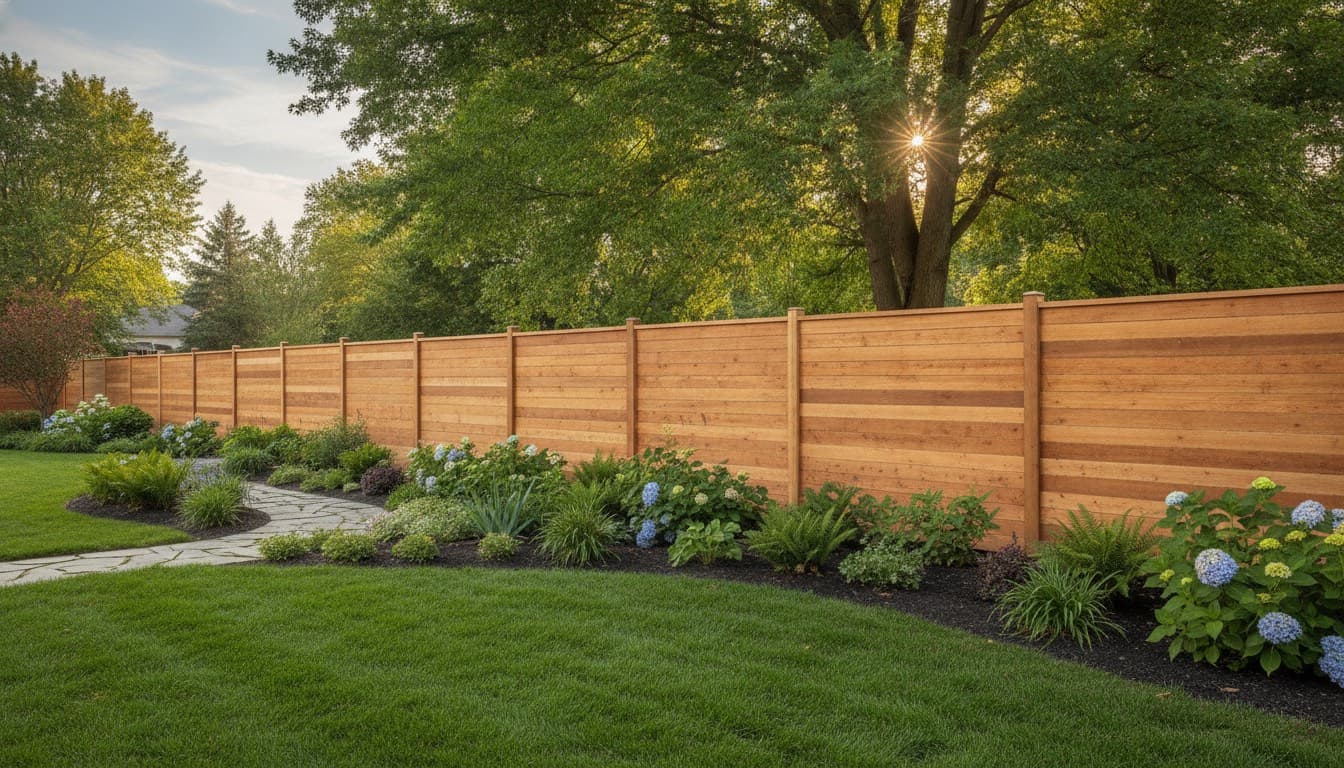
Fences and decks face the same coast, so we build them the same way: proper posts, coastal-grade hardware, and clean lines.
Fence styles we build
- Full-height cedar privacy fence: the classic West Coast choice for blocking sightlines and wind
- Horizontal-slat cedar: a clean, modern look that pairs well with contemporary homes and decks
- Semi-privacy and picket: lower fencing that defines the yard without closing it in
- Gates and matching fence-and-deck combinations designed as one project
How we install a fence that stays straight
Most fences that fail do so at the posts. On the coast, posts set poorly heave, rot, or lean within a few years. We build so that does not happen.
- Locate the line: we confirm the property line and check for setbacks and any bylaw height limits before we dig
- Set the posts properly: posts go in at the right depth, plumbed and set to resist heaving in clay ground
- Coastal-grade hardware: we use fasteners and post bases that stand up to wet-coast conditions
- Build clean: rails, boards, and caps go on straight and consistent, with gates that swing true
What drives the cost
Like a deck, a fence price is set by the site and the design, not a flat rate.
- Length: total linear feet of fence
- Height and style: taller privacy fencing and detailed horizontal-slat builds cost more than basic panels
- Material: cedar grade and whether you add caps, trim, or a finished top
- Ground and access: rocky, sloped, or root-filled ground makes post-setting slower
- Gates: number of gates and whether they are standard or oversized for vehicles
- Removal: taking out and disposing of an old fence before the new one goes in
Built for Victoria wind and rain
Coastal fencing takes a beating that inland fencing does not: driving winter rain, salt air near the water, and wind that finds any weak post or loose board. We build for that, setting posts to resist our clay and moisture and using cedar and hardware chosen for the coast, so your fence still stands straight after years of Island weather.
Common questions
How tall can a fence be in Greater Victoria?
Height limits are set by each municipality and often differ between front and rear yards, with many allowing taller fencing in the back than the front. Because the rules vary by municipality and by where the fence sits on your lot, we confirm the limit for your property before we build.
How long does a cedar fence last here?
A well-built cedar fence commonly lasts 15 to 20 years on the coast, with the posts being the part most likely to fail first if they are not set properly. Setting posts correctly and keeping the cedar maintained is what gets you the long end of that range.
Can you build a fence and a deck together?
Yes, and it is often the best-value way to do both. Building the fence and deck as one project means one crew, one mobilization, and a design where the two match. Many of our jobs combine a deck with a privacy fence or screen.